What Black Cookouts Taught Us About Grant Reporting
.png)
As I was recently reflecting on my first big girl job after graduating from grad school, I thought about my role as a Development Associate for a human relations organization. I had always been resistant towards working in fundraising — the idea of asking people for money felt far outside my comfort zone. Yet, as fate would have it, one of my first professional roles landed me right in the world of fundraising. One of my most vivid memories from my time working in development was preparing for a site visit from one of our institutional funders. In the lead-up to the visit, my colleagues and I were all running around the office, cleaning, and making sure all of our documents were in order, because the place had to be perfect in preparation for this site visit. Our mad rush to position ourselves as nearly perfect was because our future organizational funding was dependent on the impact of our work as an organization, as well as how well we presented ourselves. When the day of the site visit arrived, we stood dressed in our finest business attire, black slacks and our nicest dresses because we had to look the part. But behind the pristine office, freshly printed documents highlighting our achievements, and staff dressed to the nines, I was left deeply stressed out over the pressure to impress this funder.
Honestly, I don't remember the outcome of this meeting. I assume that our funding was renewed and we were able to continue to provide youth in our community with the opportunity to do human relations work and engage in community service, but that stressful experience itself stayed clearly marked in my mind.
Fast forward about five years to the Fall of 2019 and I find myself on the other side of the table — now working as a program officer with a local community foundation. I was getting acclimated to my new role, and one of those onboarding projects was conducting a site visit with some of my grantee partners. As I prepared for those site visits, the memory from my stressful site visit preparations years ago came back to the forefront of my mind. At that moment, I hoped that our partners were not feeling the same stress and anxiety that I felt when I was a Development Associate, but I’m sure they were. Shortly after this site visit, COVID hit, and so the way that philanthropy operated shifted completely. We embraced the trust-based model, we conducted site visits virtually, we built relationships in a completely different way, and we saw that organizations were achieving impact AND had the opportunity to be more authentically themselves during this new iteration of how site visits and reporting were being conducted. As philanthropy operated from a place of humanity due to the challenges of our new pandemic reality, I wondered how philanthropy’s approach to this work could be sustained long term.
Fast forward another 5 years, and today, I find myself sitting at the table as the Director of Grantmaking & Programs at Cypress Fund.
In April, I began a cohort with MDC, a community of practice of about 15 women across North Carolina who dreamed about what a new era of philanthropy could look like. This cohort was designed based on Dimple Abichandani’s book with the same title, “A New Era of Philanthropy,” which made me think about our own practices here at Cypress and how we are, in many ways, already living that new era of philanthropy. At Cypress, we are investing in building power through a multiracial democracy and facilitating participatory grantmaking processes through programs like Funding to Win that shifts decision making power to community. We also see ourselves as movement accomplices focused on learning from our partners and being led by their strategies. And we invest in people by examining our own internal “Whole people, Whole policy” approach that takes into account the full humanity of our staff, board, and movement partners.
In our first session together with MDC, we all dreamed about what a new era of philanthropy could look like, and at the end of the day, my group wrapped with a collective vision statement for that new era of philanthropy:
“Rooted in right relationships and radical imagination with intention and courage to make philanthropy a space of joy, love and redistribution.”
As we wrapped up our last funding cycle with Funding to Win, we thought about how we can center community and infuse joy throughout our grant reporting process. We thought about what if reporting, instead of being a punitive tool for accountability, was a place for reflection, joy, and celebration. We know that the work that our partners are doing on the ground is for the long haul and that the outcomes that they hope to achieve cannot be done in a one-year grant cycle. Our Grantmaking and Programs team decided to reimagine the Funding to Win grant reporting process by asking one question: What if we created the space that motivates movement partners and drives them to continue to do this hard work, rather than follow the traditional path of grant reporting?
The Cookout: Joy in Reporting
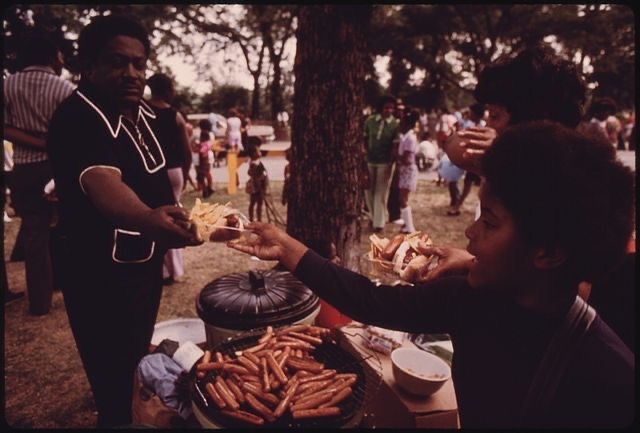
In our commitment to supporting accessible and meaningful reporting that does not require undue labor or drain capacity from grantee partners, Cypress Fund extended an invitation for partners to join us for a final virtual convening for Funding to Win. Early in the planning of Funding to Win Safety and Joy, our Programs team envisioned an in-person gathering and celebration of Black joy during Black August 2025. While our current realities did not allow for that event to take place, we designed the final convening to evoke the spirit of a Black cookout — a cultural, and in many ways spiritual, connector for Black communities in America for generations. What started as gatherings in enslaved communities on only days off (Sundays), soon turned into Juneteenth celebrations after emancipation, then blossomed into us hosting cookouts for just about any reason — birthdays, family reunions, Memorial Day, baby showers, or cooking out just because we wanted to be in community with our people. For over two centuries, cookouts have been places of joy and safety for Black communities, a place we can go in both reality or in spirit and know that celebration is and must always be a core part of who we are.
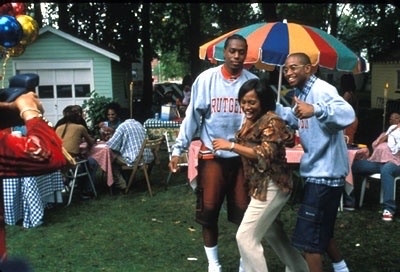
The gathering with grantee partners opened with an icebreaker, “Who all gone be there?”, an ‘if-you-know-you know’ Black colloquialism, where partners shared what dish they were “bringing to the function.” A spades table created space for partners to boast about their work, echoing the playful competitiveness and storytelling that often unfolds over a game of Spades at a cookout. Through a series of prompts and joyful exchanges, the space cultivated laughter, reflection, and connection. We closed with “takeout trays,” inviting each partner to share parting sentiments shaped by the current moment, their visions for a new world, and the enduring legacy of leaders such as Rev. Dr. Pauli Murray who we carry with us as we move throughout this work.
In "A New Era of Philanthropy," Dimple writes, “We live in high-stakes, chaotic, and stressful times. I want philanthropy to feel like an act of joy, solidarity, and mutuality. What if we agreed that philanthropy is not only supposed to be 'feel-good' but that it should feel good? Like a dance party — kinetic, collaborative, joyful, but lots of mirroring and a lot less stress, there should be rhythm and so much movement."
Our partners expressed deep appreciation for the “cookout” structure of the convening. One partner acknowledged Cypress’ transparency in naming the space as part of the reporting process, while sharing how pleasantly surprised they were by the sense of celebration, camaraderie, and genuine exchange. What we took away from reimagining the grant reporting was something Cypress will carry with us as we move forward: Strategy doesn't have to be sneaky or manipulative. We know we have to do a report but we can get the information we need, make it worth people’s time, and still have fun.
At the cookout’s closing, partners offered affirmations that held both care and clarity:
You are worthy.
You deserve.
You belong in community.
Rest.
Come celebrate with me.
As someone who has experienced philanthropy from both sides of the table, I am grateful to now be part of shaping a practice that feels more aligned with my values — one that recognizes that accountability and joy are not mutually exclusive. If we are committed to building a new era of philanthropy, my hope is that it’s one where reporting is not simply a measure of impact but an opportunity to celebrate it; and where communities are not only sustained in their work, but also seen, honored, and loved every step of the way.
— Read our Funding to Win Reflection Report here.
— Listen to our Black Joy playlist!